
Scroll

The Problem

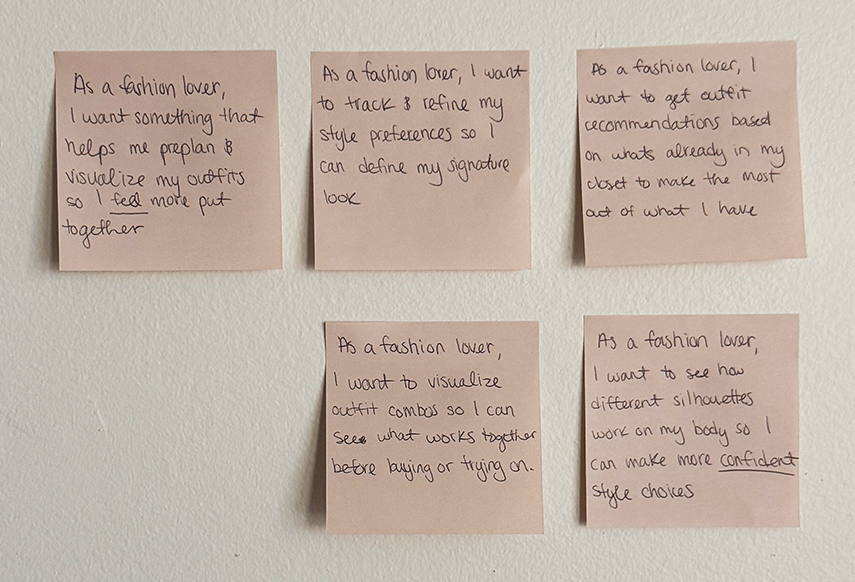
People often struggle to define their personal style, which often results in impulse buying and overconsumption, leaving them with low-quality clothing they don’t truly love.

Why is that?

Scope of work

Conceptualization • User Research • Interface Design • User Testing • Branding Video Production

tools used

Figma • Photoshop • Premiere Pro • UserTesting

Marketing Video

Produced & edited by Melissa Lisi

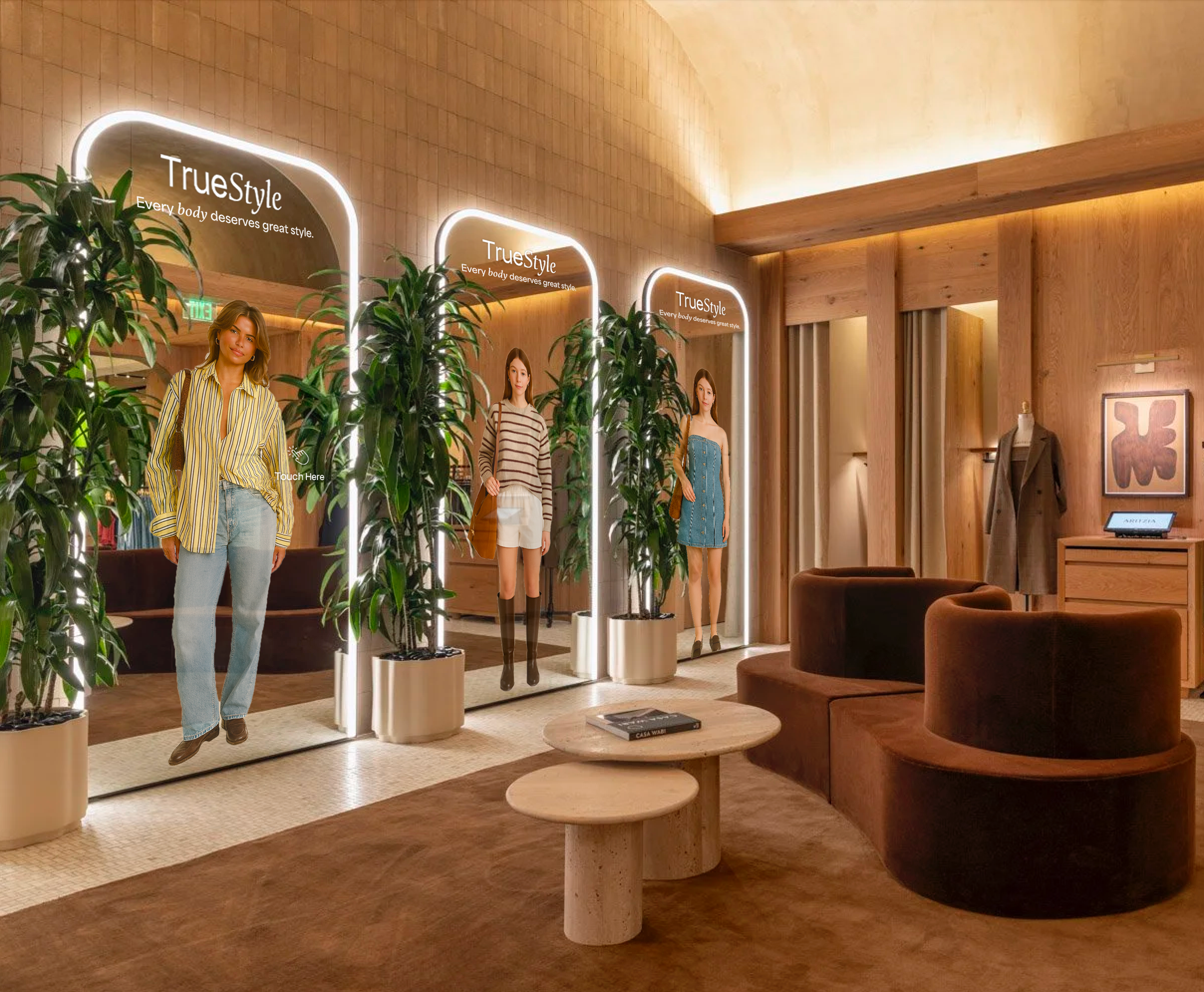
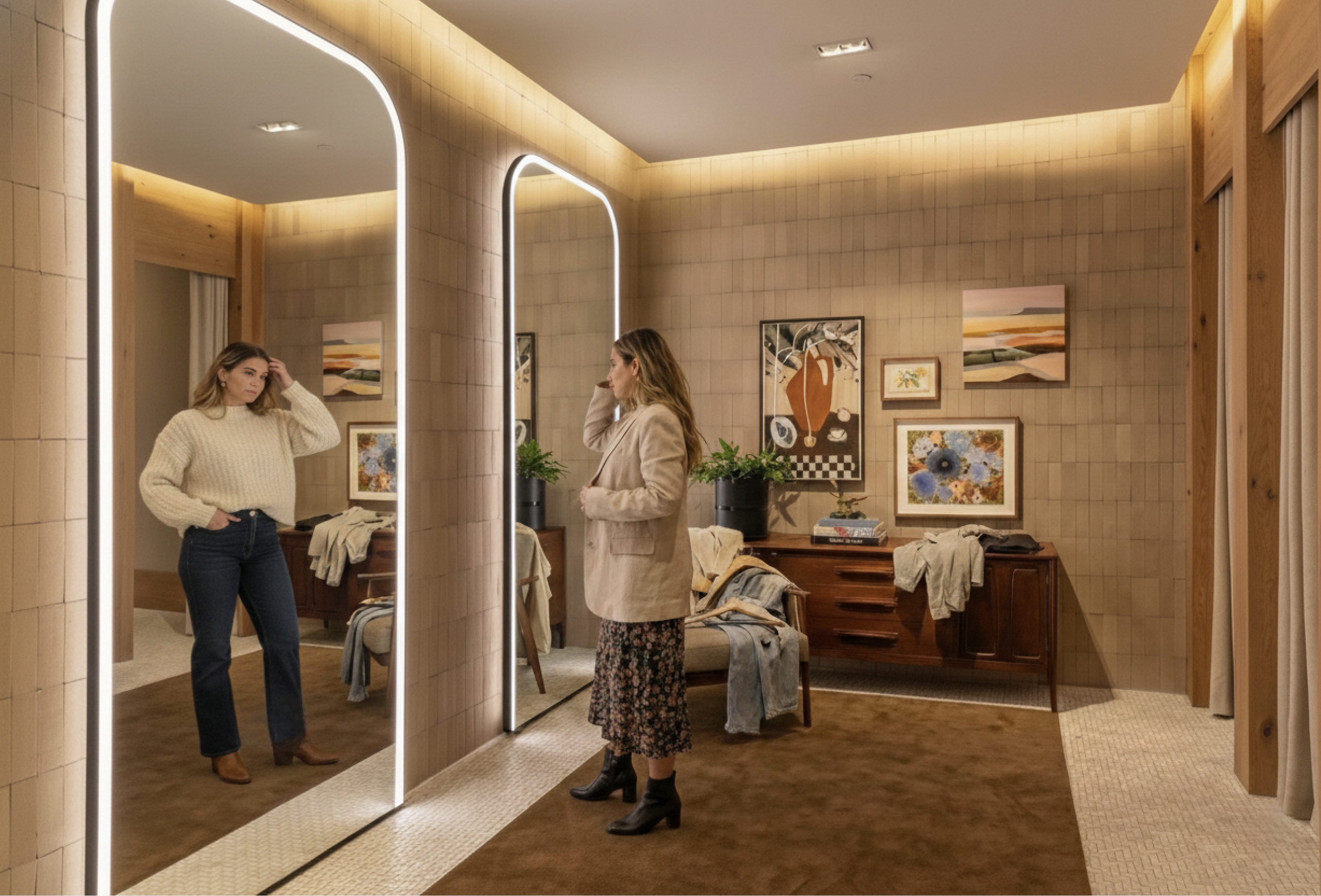
In-Store AR Mirror Experience

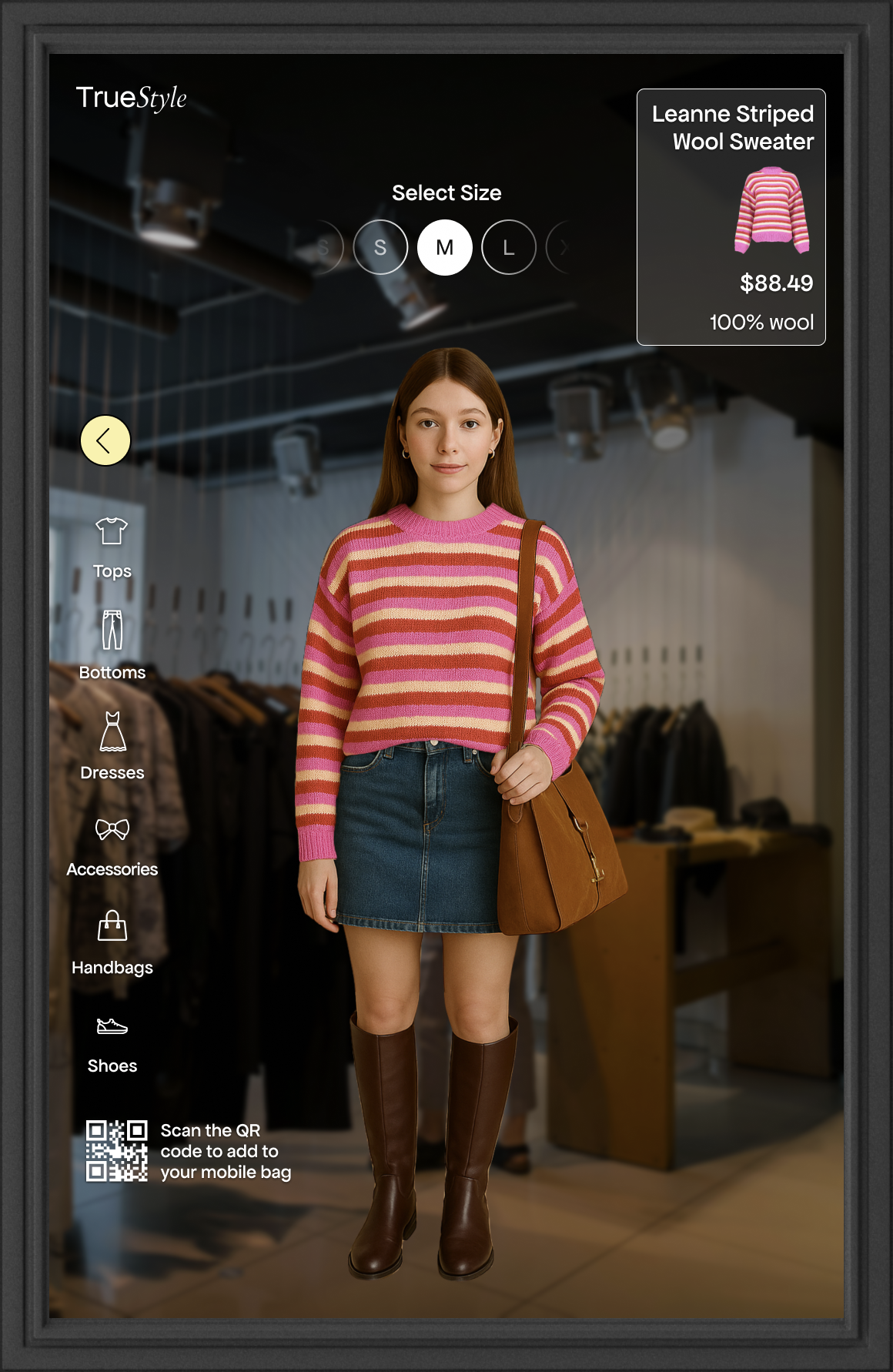
Instant Virtual Try-On
See clothing on body in real time using AR without entering a fitting room.

Gesture-Based Navigation
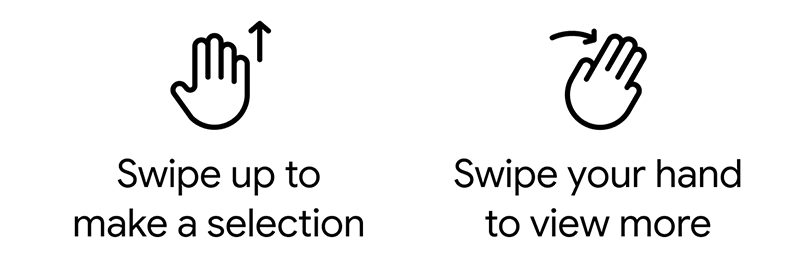
Intuitive gesture-based navigation, enabling a (mostly) touch-free interaction.

AI Personal Stylist
AI stylists suggests clothing based on body type, fit preferences, and personal style, helping you shop more intentionally.

Outfit Styling in Real Time
Mix and match multiple items, helping visualize complete outfits. 

Seamless App Connection
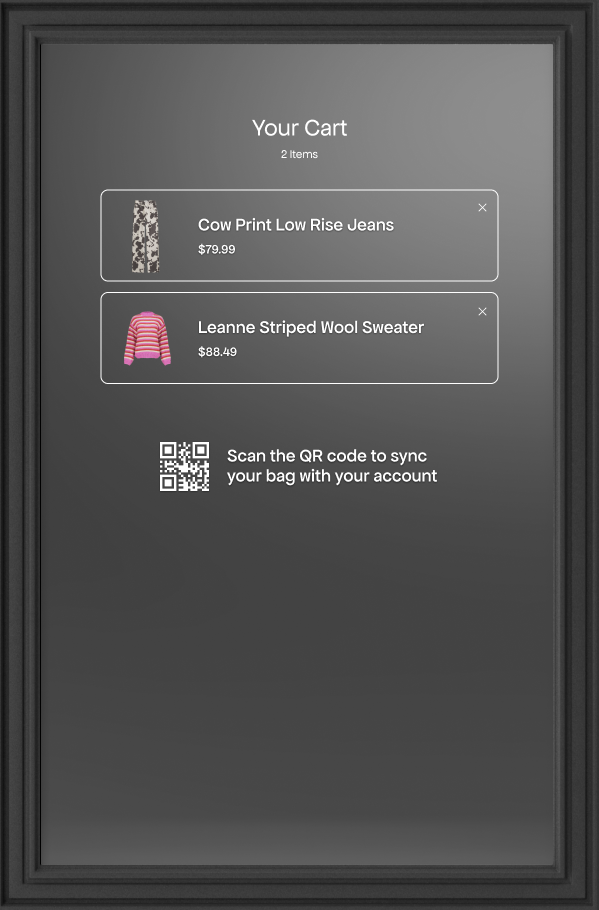
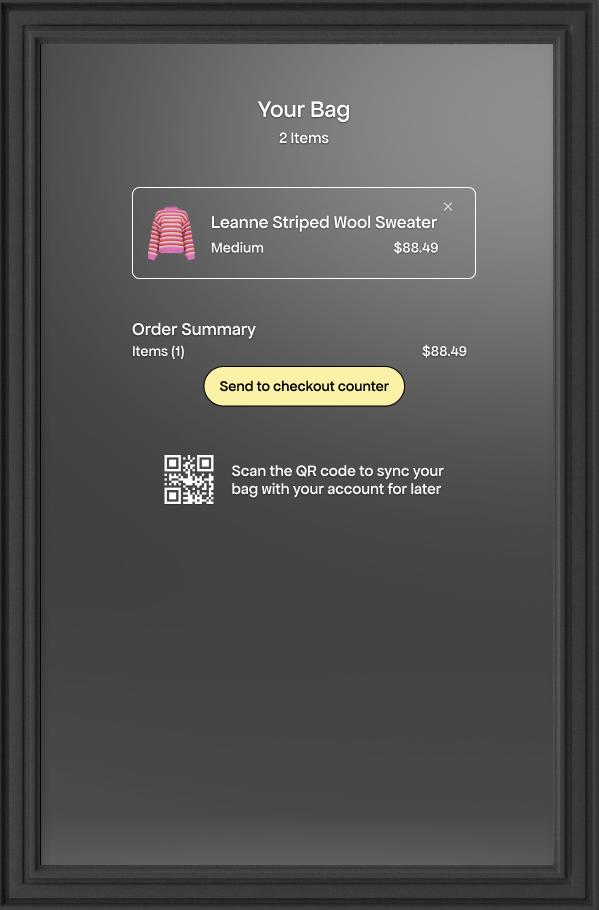
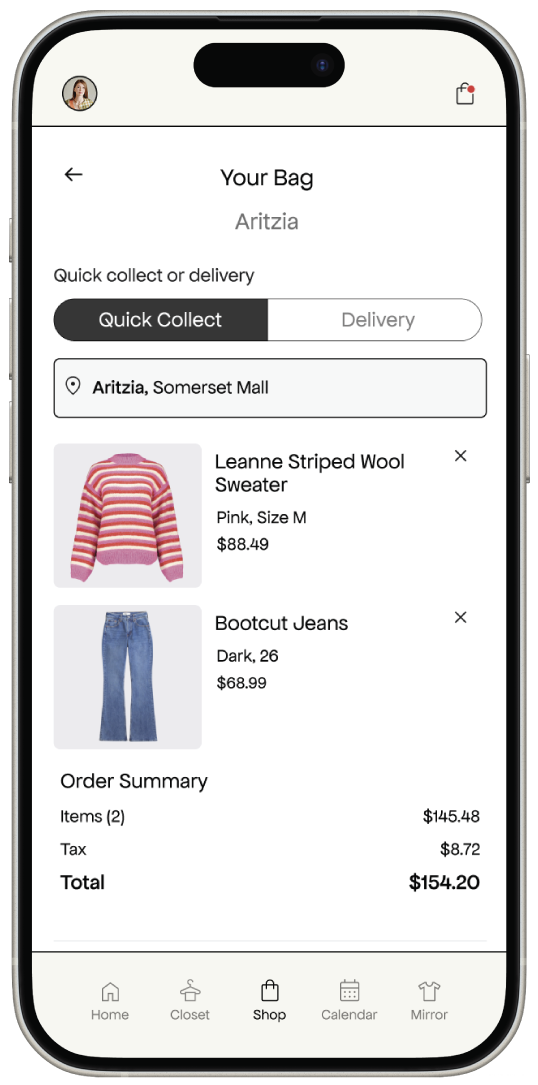
Scan the QR code on the mirror, and items are instantly added to the user’s mobile app cart.

Fast, Frictionless Checkout
Purchases are completed in the app, reducing checkout lines. Once an order is placed, store associates prepare the selected items for pickup at the Quick Collect kiosk.

In-Home Mobile App Experience

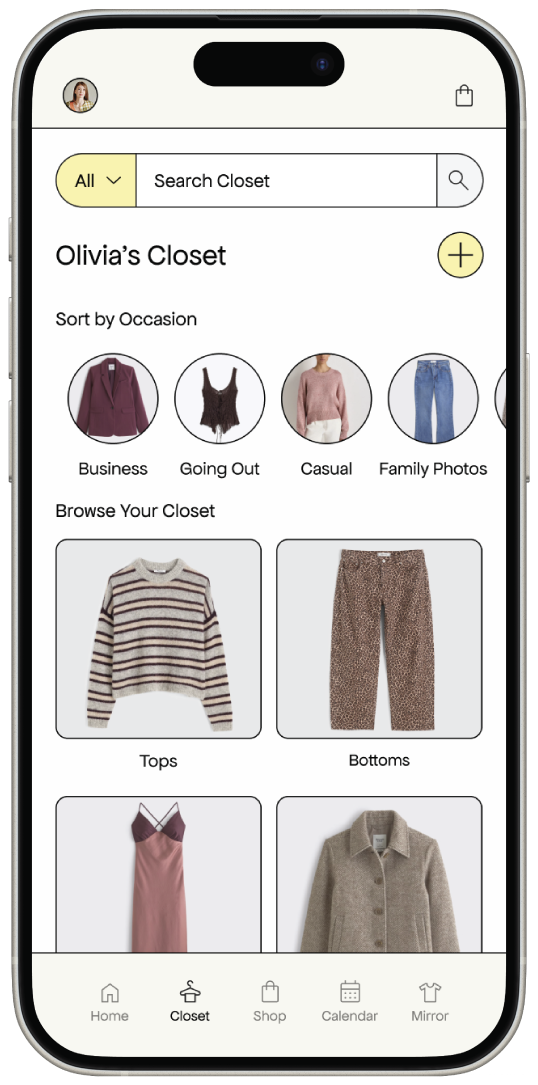
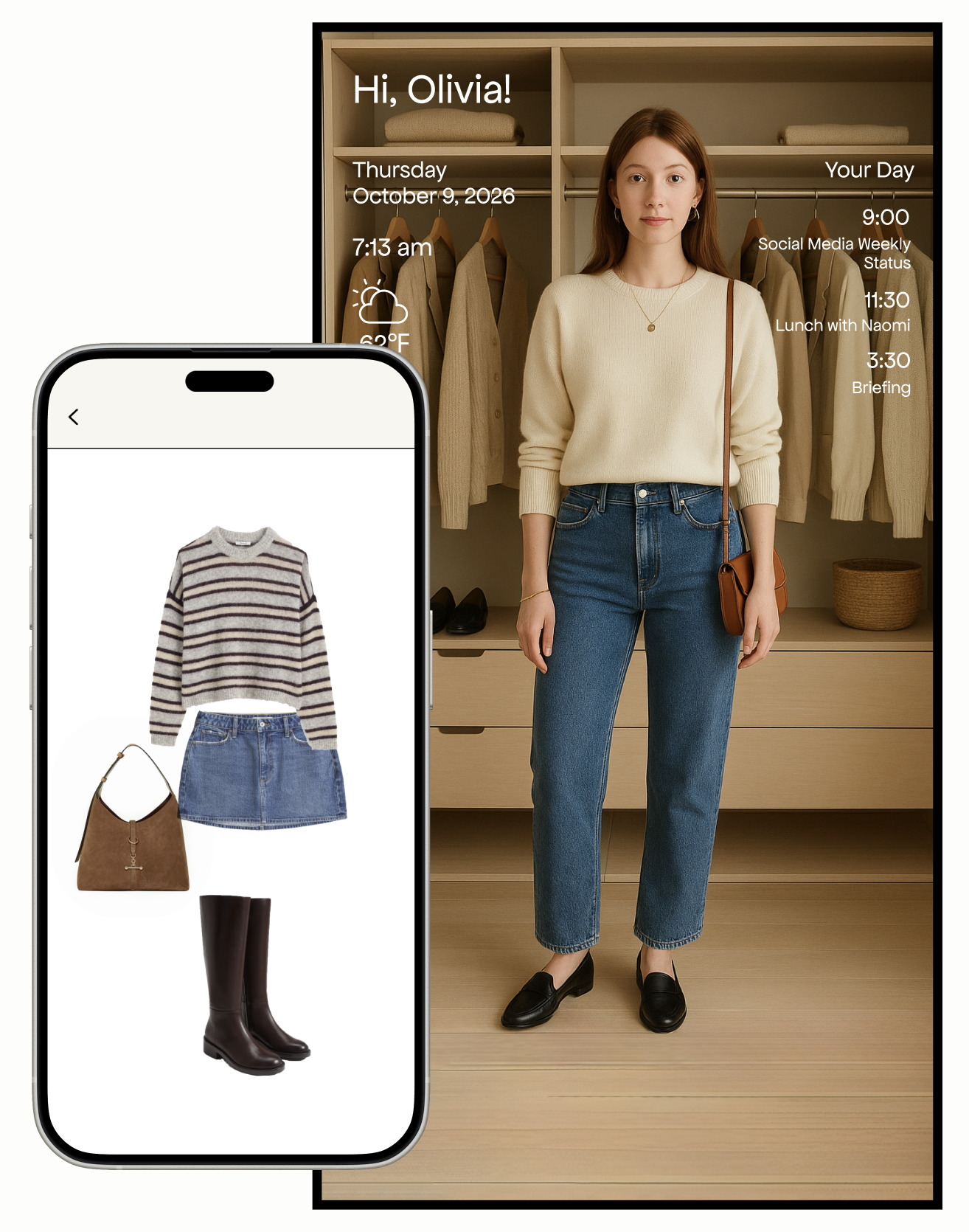
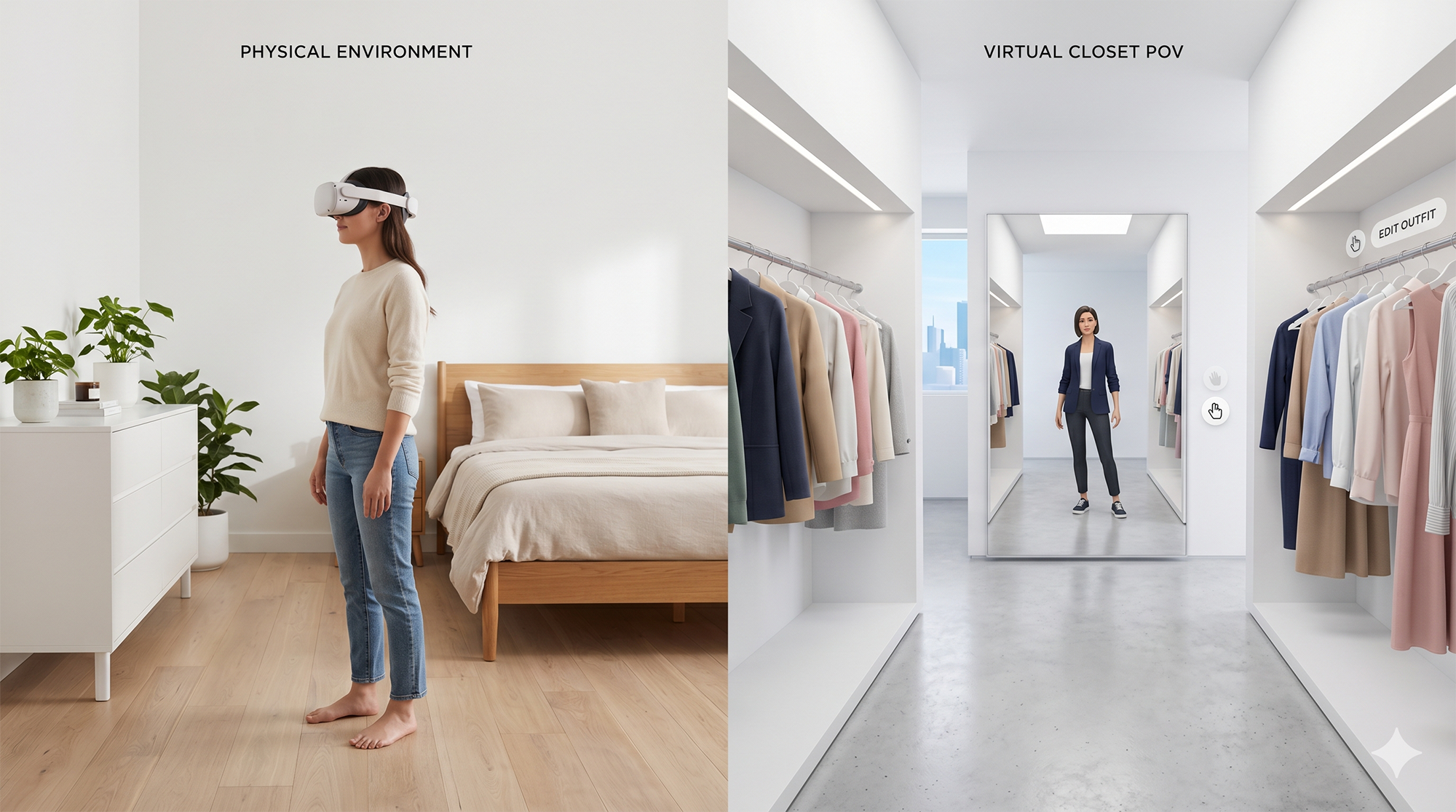
  • Upload a photo to create a personalized avatar and virtually try on clothing from anywhere.

  • Dress your avatar using items from your existing closet or browse and try on clothing from participating retailers.

  • AI stylists suggests clothing based on body type, fit preferences, and personal style, helping you shop more intentionally.

  • Style complete outfits on your avatar, experiment with combinations, and identify gaps in your wardrobe before making new purchases.

  • Combining your digital measurements with garment measurements, the app provides realistic visualization on how clothing may fit and drape.

Section Styles bg-left sticky

Consumer Value Add

Streamlining the Try-On Experience

TrueStyle makes it easier for consumers to try on clothing by reducing fitting-room wait times and enabling fast virtual try-ons in-store and at home, allowing shoppers to explore more styles and build complete outfits with confidence before purchasing.

Section Styles bg-right

Section Styles bg-left sticky

Business Value Add

Faster Try-Ons and Higher Conversion

TrueStyle creates value for retailers by reducing fitting-room congestion and speeding up the try-on process through virtual try-ons in-store and at home, helping shoppers move faster, engage with more products, and increasing conversion while maximizing store space.

Section Styles bg-right

Section Styles bg-left sticky

Business Model

TrueStyle operates as a B2B SaaS platform for apparel retailers. Clothing stores lease the smart mirror hardware and pay an ongoing retainer for software licensing, maintenance, and content management.

Revenue Streams

On the consumer side, the mobile app uses a freemium model: core virtual try-ons are free, while a subscription unlocks advanced features like AI-powered fit and style insights and early access to new drops.

On the retail side, TrueStyle earns a small commission on clothing purchased through the app from participating retailers, aligning revenue with successful conversions while incentivizing retailer partnerships.

Section Styles bg-right

Feasibility

From In-Home Concept to In-Store Reality

My initial concept positioned the AR mirror as an in-home product.

However, after evaluating feasibility, I realized that the hardware requirements alone would make it inaccessible to the average consumer.

This insight prompted a pivotal design question: how could I preserve the core value of the experience while making it scalable and realistic? That shift led me to reframe the concept for in-store use, where the technology could be shared, costs distributed, and the experience integrated directly into the retail environment.

Hardware total = $2,500 - $8,000

My design process

I began by outlining my ideal end-to-end design process, mapping each phase from initial research through final user testing. This framework helped me stay intentional and structured throughout the project.

My Research Methodology

Research Plan

My research explores shoppers’ pain points to develop actionable strategies that enhance the shopping experience and boost confidence in personal style.

User Interviews

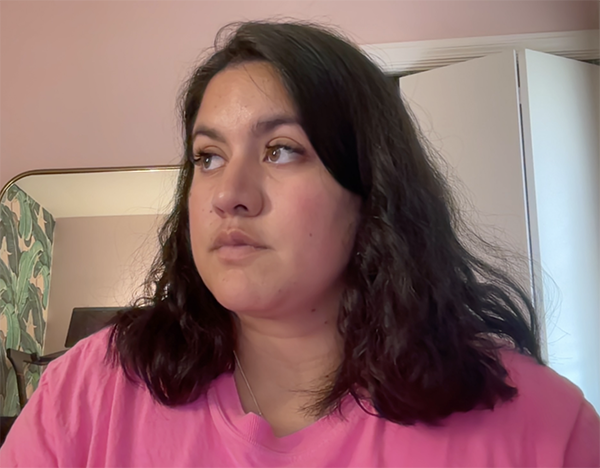
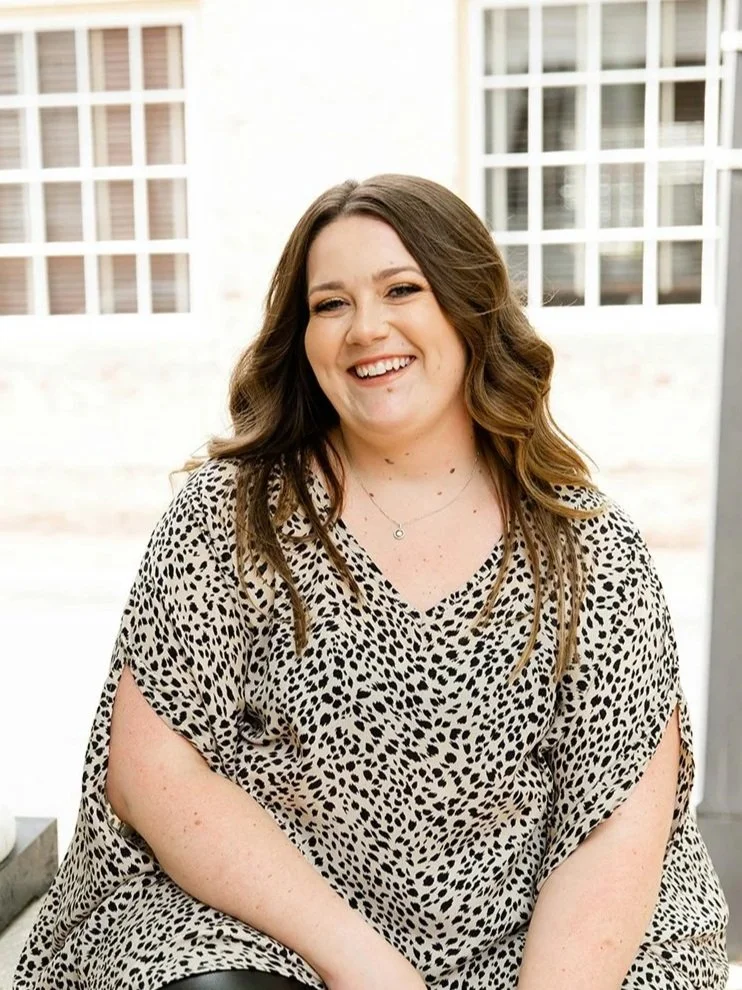
Interviewed to three females and one male ages 30 - 42 who have a strong interest in shopping for clothes and fashion

Research Analysis

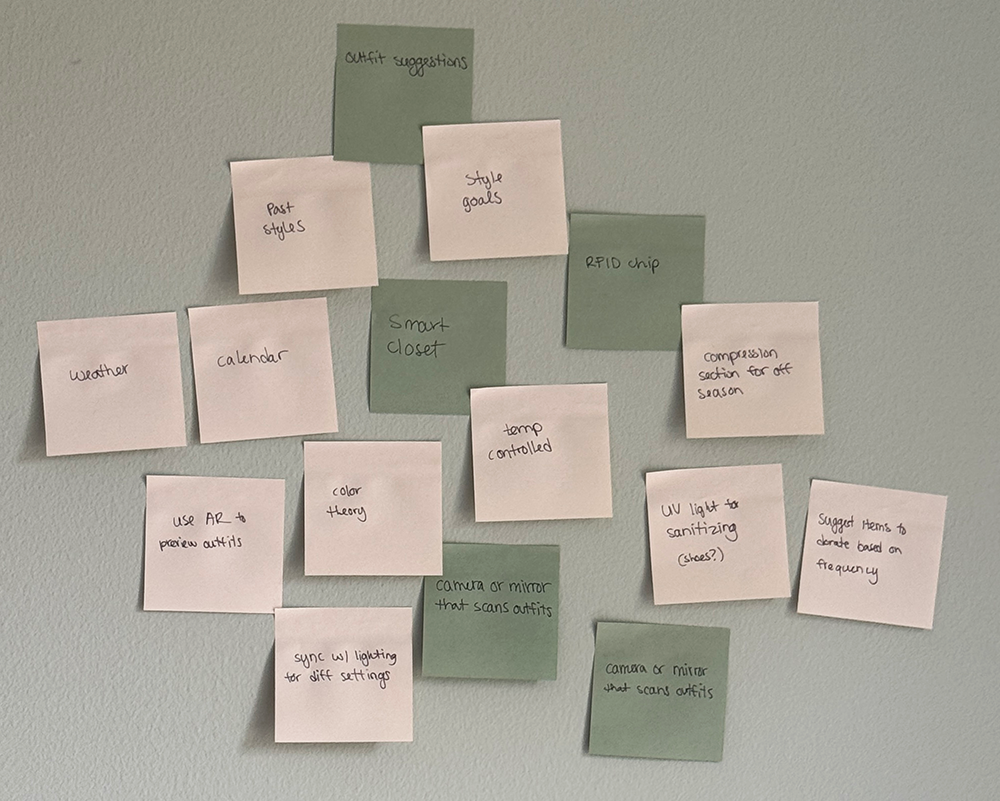
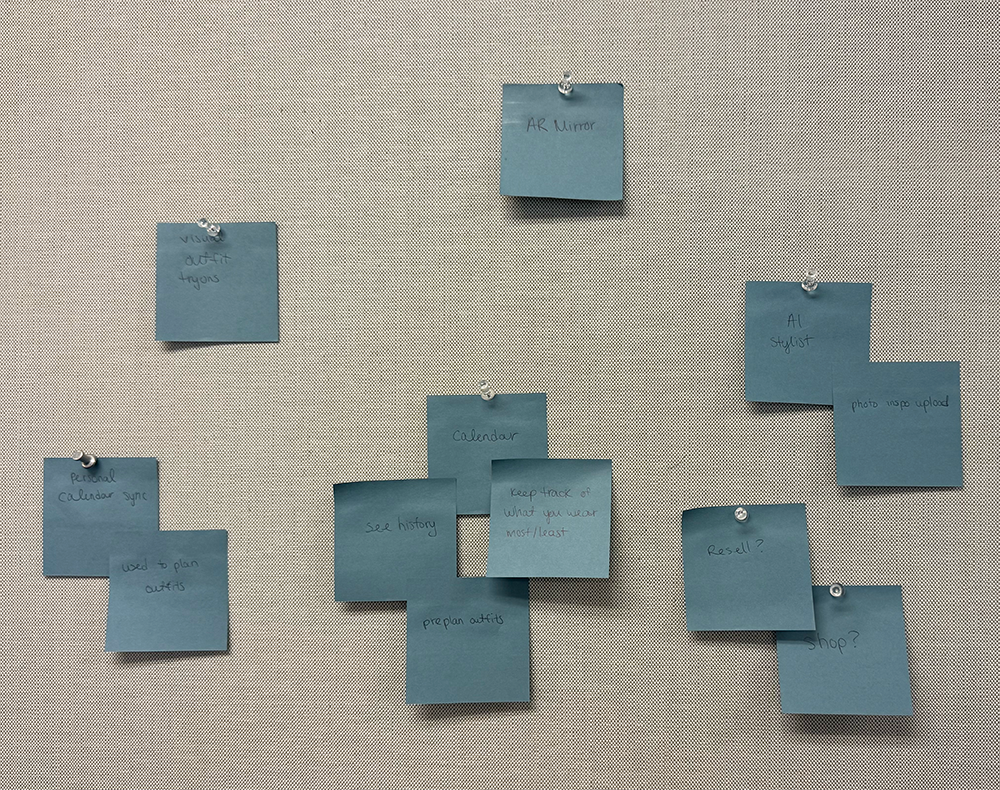
Synthesized research data into affinity maps and coded key themes

Interview Outcomes

  • “Because I'm plus size, it's kind of hard to find clothes that fit correctly because I'm also very short.”

    How to assist users in filtering clothing to ensure the proper fit for their body type?

  • “I won’t use a fitting room, I’d rather take something home and try it on and then come back later and return it if it doesn’t work out.”

    How to make the try on experience more enjoyable?

  • “They'll have models that are my size and that's kind of helpful to see. If not I have to rely on reviews but it seems like people my size don’t leave reviews or reviews with images.”

    How can we provide users a true fit experience before they make a purchase?

  • “I just have like a funny shaped body, so it's usually just, I think it's more so me than it is like the actual, shopping, just trying to find things that fit correctly or look good on me.”

    How to build confidence in the users shopping experience?

How Might We

How might we help shoppers discover which clothing pieces flatter their unique body types without trying them on so they feel more confident in their style?

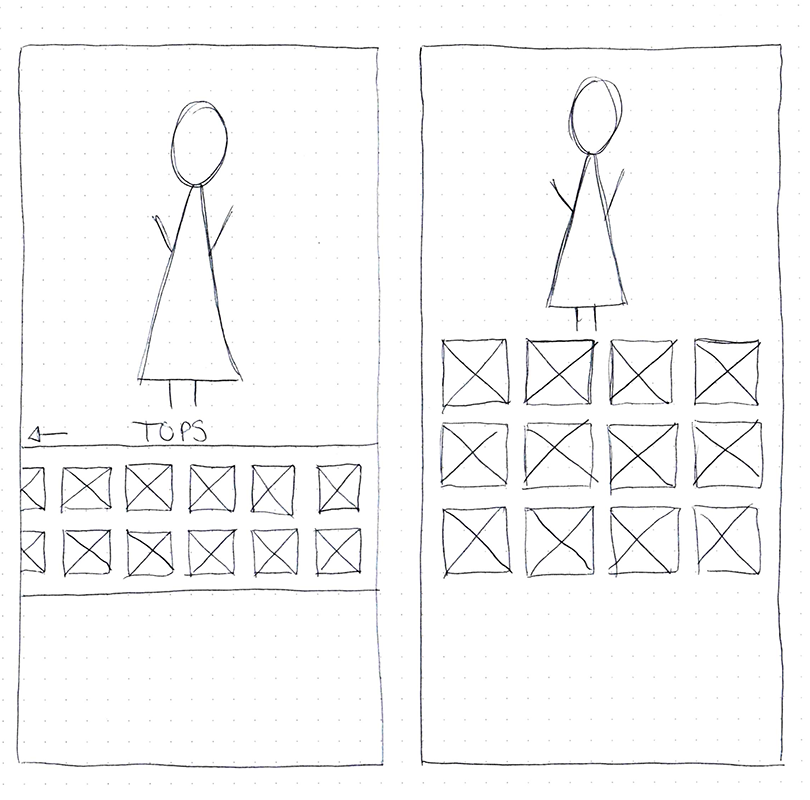
Early concepting

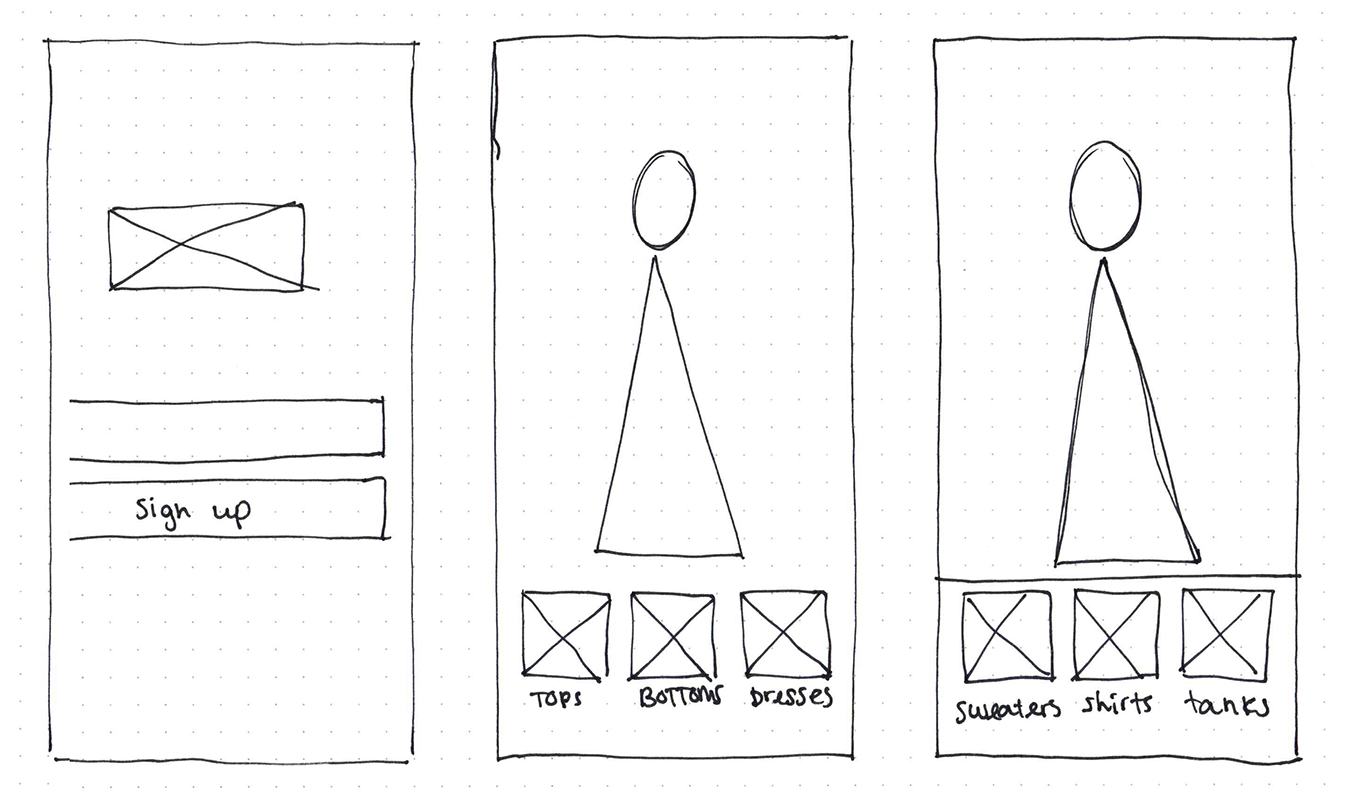
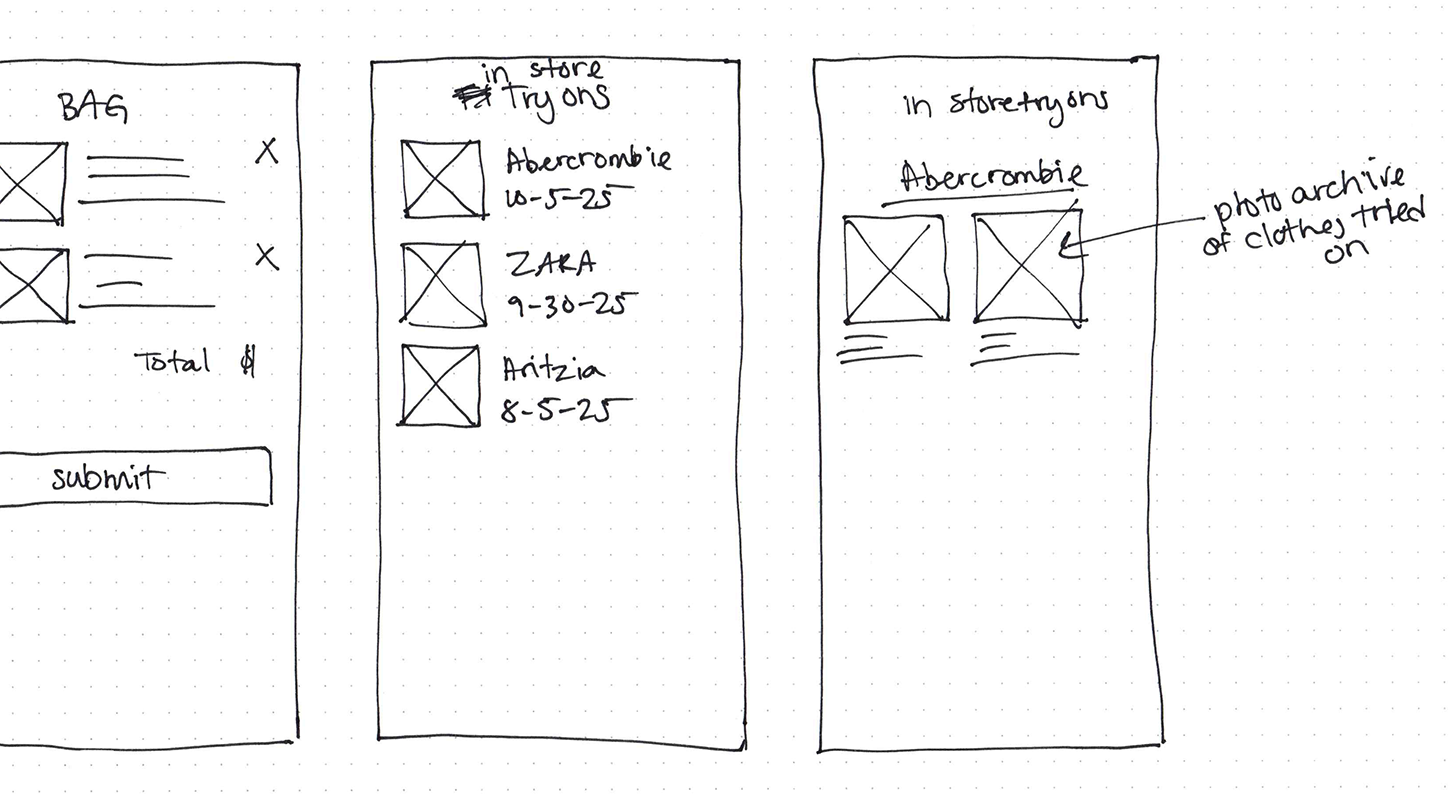
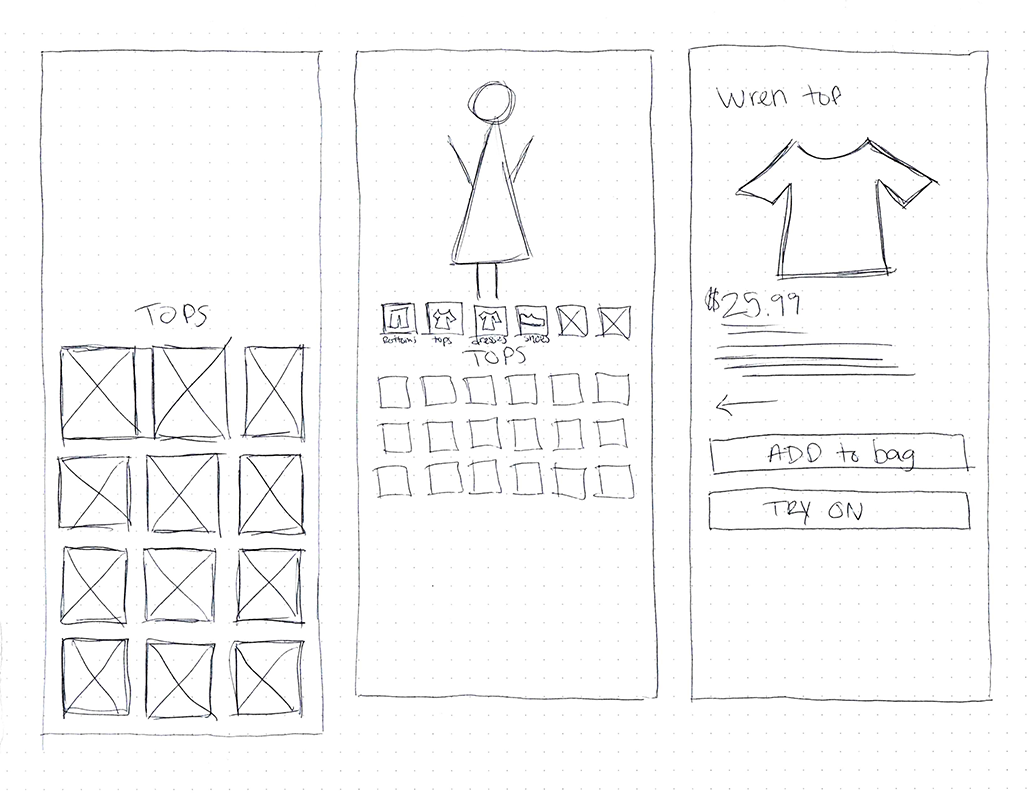
Mobile App User Flow

Mid-Fidelity Wireframes

User Testing

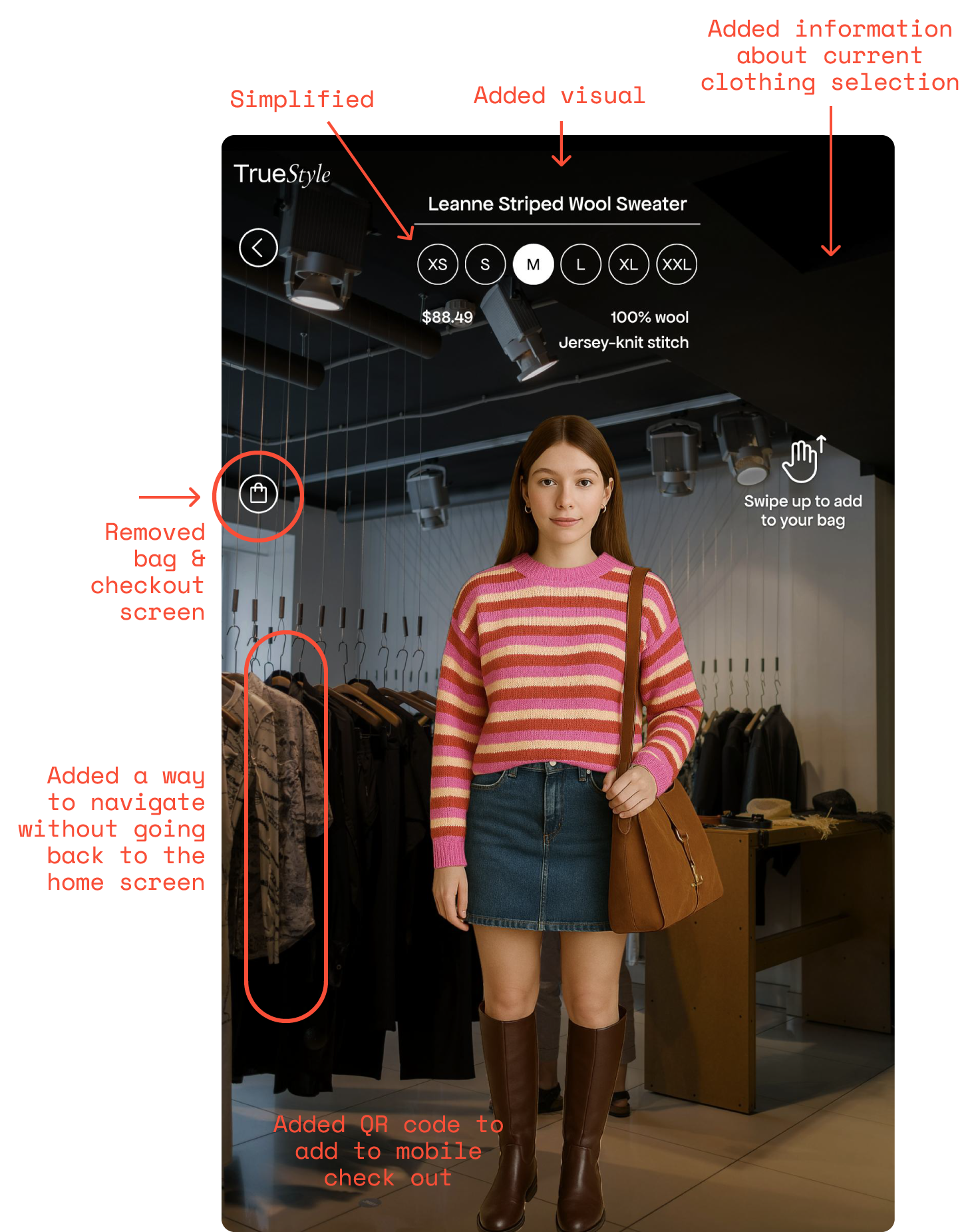
What worked and what didn’t?

  • Users were confused how to check out

  • Long lines may form if the experience depends too heavily on the mirror

  • Users wanted to add grand total, tax and other features that would further clutter the screen and extend the mirror experience (create long lines)

  • How to remove clothing was a challenge

Before

After

Interested in the process? View my process below

Next Steps…

as part of my Master’s Capstone I plan to…

  • Refine User Flow

    Map and refine the end-to-end user journey to ensure the try-on and check out experience is intuitive, fast, and frictionless.

  • Rework Interface

    Redesign the interface to clearly guide users through gesture-based interactions while remaining minimal and mirror-first.

  • Build Prototype

    Using a large-format display, Unity, and C#, I will build a working AR mirror prototype that overlays virtual clothing onto a live camera feed.

  • User Test

    Conduct moderated user testing sessions to evaluate usability, engagement, and perceived value of the AR try-on experience.

View my work

Next
Next

Gentle Fun Designed for Little Minds